
Be Specific About Books To Pafko at the Wall
| Original Title: | Pafko at the Wall |
| ISBN: | 0743230000 (ISBN13: 9780743230001) |
| Edition Language: | English |
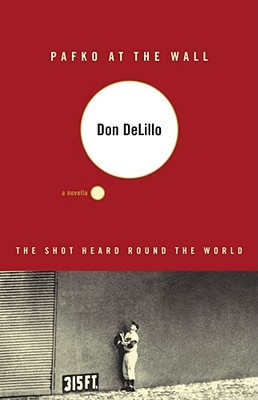
Chronicle Conducive To Books Pafko at the Wall
"There's a long drive.
It's gonna be.
I believe.
The Giants win the pennant.
The Giants win the pennant.
The Giants win the pennant.
The Giants win the pennant."
-- Russ Hodges, October 3, 1951
On the fiftieth anniversary of "The Shot Heard Round the World," Don DeLillo reassembles in fiction the larger-than-life characters who on October 3, 1951, witnessed Bobby Thomson's pennant-winning home run in the bottom of the ninth inning. Jackie Gleason is razzing Toots Shor in Leo Durocher's box seats; J. Edgar Hoover, basking in Sinatra's celebrity, is about to be told that the Russians have tested an atomic bomb; and Russ Hodges, raw-throated and excitable, announces the game -- the Giants and the Dodgers at the Polo Grounds in New York. DeLillo's transcendent account of one of the iconic events of the twentieth century is a masterpiece of American sportswriting.

Describe Containing Books Pafko at the Wall
| Title | : | Pafko at the Wall |
| Author | : | Don DeLillo |
| Book Format | : | Hardcover |
| Book Edition | : | First Edition |
| Pages | : | Pages: 96 pages |
| Published | : | October 9th 2001 by Scribner |
| Categories | : | Fiction. Sports. Baseball. Contemporary. Historical. Historical Fiction. Novella |
Rating Containing Books Pafko at the Wall
Ratings: 4.13 From 1039 Users | 208 ReviewsCommentary Containing Books Pafko at the Wall
This is now the introduction to Delillo's Underworld. So go see my review of that ;)Yesterday, Jonathan Schwarz was talking about how New York hasn't been the same since the Dodgers and Giants left. I didn't live here back then, but he claims it was perfect, so I'll have to to take his word for it. Anyway, I think that's something DeLillo is trying to get at with this story, a fictionalized account of the 1951 playoff between the Brooklyn Dodgers and the New York Giants. Seven years after this game, both the Giants and the Dodgers would leave for California; the Polo Grounds
An interesting piece on historical events tied together in a small space of time.
It has been stated that Pafko at the Wall is not a story about baseball. In many ways, this is true. Although the story uses the baseball game to guide the reader through the story, the book is actually about the creation of unity among mankind by a single, significant event. The story focuses largely on the congregation of different social and ethnic backgrounds that, during the 1960s, would have otherwise preferred to remain separate. In the book, we see iconic figures such as J Edgar Hoover
Pafko at the Wall is not about baseball. Instead, it is about the wonders and hysteria of humanity. It puts a human pattern on display: people gather to watch something. Within that something, someone wins and someone loses. Mystery fills the air, and there is no certainty of anything. People show passion toward something that is unclear, and their passion grows stronger near the end of the event. Humans tend to have associations with larger groups, but they don't know why. This trait causes
This book is interesting because while it's about baseball, there is so much more going on. It's about the anonymous faces of the fans. In this book there are musicians communicating with businessmen and comedians and then marginalized people communicating with the wealthy. It shows how big sports events can bring us together but then also tear us apart. Rather than being about the game of baseball, this story is about what happens outside of the game and in the crowds, providing a very
This book was extremely disappointing. My teacher talked it up to be a very interesting book that directly related to the US in that time period, but I just found it to be a jumbled mess of incoherent thoughts that was supposed to encapsulate the idea of a lively baseball game. The action in the book was incredibly difficult to follow at times especially since the author used multiple names to describe the same person. I wouldn't mind the continuous jumping about if the author had included some


0 comments:
Post a Comment